

In an increasingly dynamic world, the ability to take calculated risks is paramount for innovation, problem-solving, and personal growth. This crucial skill, often associated with entrepreneurship and leadership, is not solely developed through traditional academic subjects. Instead, art and music education offer unique and powerful environments for cultivating the courage to experiment, adapt, and venture beyond the familiar. These disciplines inherently encourage students to explore, make choices under uncertainty, and learn from outcomes, thereby building a foundation for thoughtful risk-taking.
The Studio and Stage as Laboratories for Experimentation
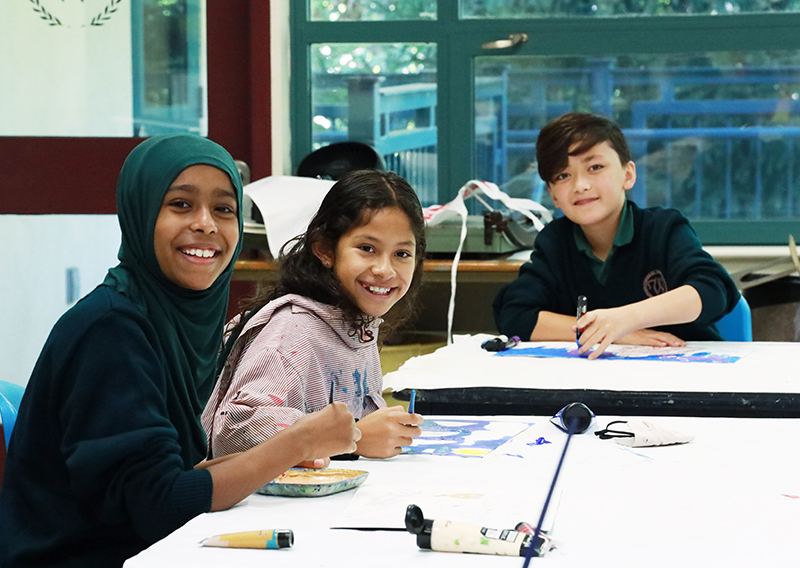
Art and music classrooms function as safe laboratories where experimentation is not just permitted but actively encouraged. Unlike subjects with definitive right or wrong answers, creative fields thrive on exploration. A painter might mix unconventional colors, a sculptor might experiment with new materials, or a musician might explore an unfamiliar chord progression. This process involves a continuous cycle of hypothesis, execution, and evaluation. Students learn to formulate an idea, translate it into a tangible form, and then critically assess its effectiveness. This iterative process, where "failure" is reframed as a learning opportunity rather than a definitive end, builds resilience and a comfort with venturing into the unknown. They discover that sometimes the most unexpected choices lead to the most profound results, fostering an intrinsic motivation to push boundaries.
Embracing Imperfection: The Role of Improvisation and Iteration
The very nature of creative work, particularly in music improvisation and artistic iteration, demands a comfort with imperfection and the ability to make rapid, informed decisions. Improvisation, whether in jazz or spontaneous composition, requires musicians to think on their feet, respond to immediate cues, and create something new without a pre-written script. This is a high-stakes, real-time exercise in calculated risk-taking, where a "wrong" note can be transformed into a new direction. Similarly, artists often work through multiple sketches, drafts, or versions of a piece, constantly refining and revising. Each iteration involves a decision to alter, add, or subtract, based on an evolving vision. This teaches students that initial attempts are rarely perfect, and that significant progress often comes from a willingness to adjust, adapt, and even discard elements that aren't working, mirroring the adaptive strategies needed in complex real-world scenarios.
Performance and Exhibition: Stepping into the Unknown
Presenting one's creative work to an audience, whether through a musical performance, an art exhibition, or a dramatic reading, is a profound act of vulnerability and calculated risk. Students must overcome self-doubt, manage performance anxiety, and stand by their creations in the face of potential judgment. This experience simulates real-world pressures, where ideas must be articulated, defended, and shared. The "risk" here is not just about the quality of the work, but about the courage to share a piece of oneself. Successfully navigating these moments builds immense confidence and teaches invaluable lessons about preparation, resilience, and the ability to perform under pressure. Even when performances don't go perfectly, students learn to recover, adapt, and grow from the experience, understanding that the act of sharing itself is a victory.
Beyond the Canvas and Score: Transferable Skills for Life
The skills cultivated through art and music education extend far beyond the studio or concert hall. The ability to experiment, embrace imperfection, adapt to unforeseen challenges, and present one's work with conviction are directly transferable to a wide array of life and career paths. Calculated risk-taking, honed in creative environments, translates into entrepreneurial spirit, innovative problem-solving in STEM fields, effective communication in leadership roles, and personal resilience in navigating life's uncertainties. By providing a structured yet flexible environment for students to explore, fail safely, and ultimately succeed through their own creative choices, art and music education equip them with the essential mindset and practical experience needed to thrive in a world that increasingly values adaptability and bold, informed action.
In conclusion, art and music education are not merely extracurricular enrichments but fundamental components of a holistic education that prepares individuals for the complexities of modern life. By fostering environments where experimentation is celebrated, improvisation is encouraged, and performance demands courage, these disciplines uniquely cultivate the capacity for calculated risk-taking. This invaluable skill empowers students to approach challenges with creativity, resilience, and the confidence to venture beyond conventional boundaries, shaping them into innovative thinkers and proactive contributors to society.