

Introduction: Beyond General Literacy
In an increasingly complex world, the ability to merely read and write is no longer sufficient. Students need to navigate vast amounts of information, discern credible sources, and construct well-reasoned arguments across diverse fields. Disciplinary literacy emerges as a critical framework, moving beyond general reading comprehension and basic writing skills to cultivate the specialized ways of thinking, reading, and communicating that are unique to each academic discipline. It challenges students to engage with knowledge not just as passive recipients, but as active participants, learning to "think like experts" in history, science, mathematics, literature, and other subjects.
What is Disciplinary Literacy?
Disciplinary literacy refers to the specialized skills and habits of mind required to comprehend, analyze, and produce texts within a particular academic discipline. It acknowledges that each field possesses its own unique epistemology – its own ways of constructing, validating, and communicating knowledge. This goes beyond simply understanding subject-specific vocabulary; it involves internalizing the distinct methodologies, argumentative structures, evidence standards, and conceptual frameworks that define expert practice in a given field.
For instance:
- Historians read primary sources not just for information, but to analyze context, identify bias, understand perspective, and construct narratives supported by evidence. They look for causality, change over time, and the interplay of social, economic, and political forces.
- Scientists engage with scientific texts (e.g., lab reports, research articles) to understand experimental design, interpret data, evaluate claims based on empirical evidence, and connect findings to broader scientific principles. They focus on precision, reproducibility, and the logical progression from hypothesis to conclusion.
- Mathematicians read symbols, equations, and proofs with a focus on logical coherence, precision, and the underlying abstract structures. Their "reading" involves deconstructing arguments, identifying assumptions, and verifying the validity of each step.
- Literary Analysts engage in close reading, scrutinizing textual details, literary devices, and narrative structures to interpret meaning, explore themes, and understand authorial intent or cultural impact. They build arguments based on textual evidence and critical theory.
In essence, disciplinary literacy is about teaching students to adopt the cognitive toolkit of an expert in a specific domain.
The Rationale: Why Disciplinary Literacy Matters
The integration of disciplinary literacy into the curriculum offers profound benefits for student learning and development:
- Deeper Conceptual Understanding: When students engage with content through the lens of a disciplinary expert, they move beyond surface-level memorization to develop a more profound and nuanced understanding of core concepts. They grasp why certain knowledge is important and how it was discovered or constructed.
- Enhanced Critical Thinking Skills: Each discipline demands specific forms of critical thinking. By learning to analyze sources like a historian or interpret data like a scientist, students cultivate higher-order thinking skills directly relevant to the challenges and questions within that field.
- Authentic Engagement and Motivation: Mimicking the practices of real-world experts can make learning more relevant and engaging. Students are empowered when they see themselves as nascent historians, scientists, or mathematicians, actively participating in the knowledge-making process.
- Preparation for Future Success: Disciplinary literacy equips students with the intellectual tools necessary for success in higher education, where specialized academic discourse is paramount, and in professional careers that demand sophisticated problem-solving and communication within specific domains.
- Empowerment and Agency: Understanding the unique ways knowledge is created, evaluated, and communicated in different fields empowers students to critically assess information from various sources and contribute meaningfully to discussions, fostering intellectual independence.
Disciplinary Literacy vs. Content Area Literacy
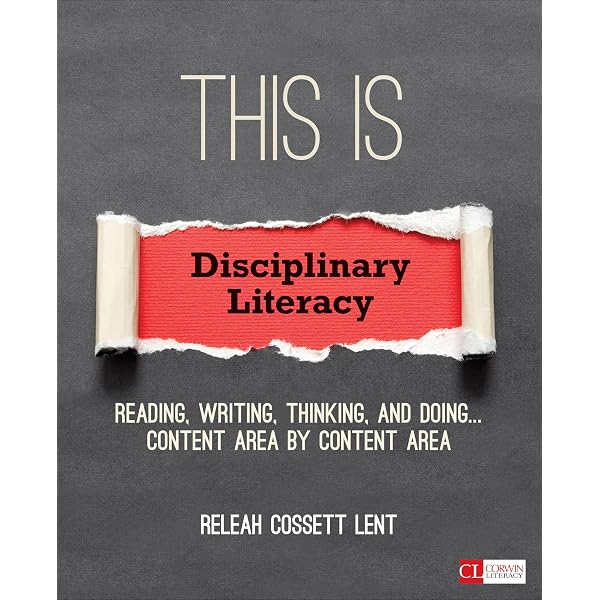
While often used interchangeably, it is crucial to distinguish between disciplinary literacy and content area literacy. Both are important, but they serve different purposes:
- Content Area Literacy focuses on general reading and writing strategies applied across all subjects to help students access and comprehend information in textbooks and other subject-specific materials. This includes skills like identifying main ideas, summarizing, understanding vocabulary, and using text features (e.g., headings, glossaries). It aims to make content accessible to all students, regardless of their prior knowledge or reading level.
- Disciplinary Literacy, conversely, focuses on the specialized ways of thinking, reading, and writing that are unique to a particular discipline. It is about participating in the discipline's unique forms of inquiry and knowledge construction. It delves into the epistemological differences between fields, teaching students how experts in that field approach texts, evidence, and argumentation.
Think of it this way: Content area literacy helps students read any textbook effectively. Disciplinary literacy teaches students how to read a scientific journal article like a scientist, a historical document like a historian, or a mathematical proof like a mathematician. It moves beyond general comprehension to deep, discipline-specific interpretation and production of knowledge.
Implementing Disciplinary Literacy in the Classroom
Integrating disciplinary literacy requires a thoughtful and intentional shift in instructional practices:
- Explicit Instruction: Teachers must explicitly model and teach the specific "moves" that experts in their field employ. This includes demonstrating how to analyze a primary source for bias, how to interpret a graph in science, or how to construct a logical proof in mathematics.
- Authentic Texts: Move beyond simplified textbooks to incorporate authentic disciplinary texts. This might include primary historical documents, scientific journal articles (or excerpts), mathematical proofs, literary criticism, or technical manuals. These texts expose students to the actual language, structure, and argumentation of the discipline.
- Modeling and Scaffolding: Teachers should model expert thinking processes aloud, demonstrating how they approach a text or problem. Scaffolding strategies, such as graphic organizers tailored to disciplinary analysis, guided questions, and collaborative tasks, can help students gradually internalize these practices.
- Disciplinary-Specific Tasks: Design assignments that require students to produce knowledge in ways authentic to the discipline. Instead of just summarizing, ask students to write a historical argument, design an experiment, critique a scientific claim, or analyze a literary work using specific critical lenses.
- Collaborative Learning: Encourage students to work together to grapple with complex disciplinary texts and problems. Peer discussion and debate can help students articulate their thinking, challenge assumptions, and refine their understanding through a disciplinary lens.
Conclusion: Fostering Expert Thinkers
Disciplinary literacy represents a powerful pedagogical approach that transcends the traditional boundaries of subject matter instruction. By explicitly teaching students to think, read, and write like experts in each field, educators not only deepen content understanding but also cultivate essential critical thinking skills, foster authentic engagement, and prepare students for the intellectual demands of higher education and future careers. It is a commitment to empowering students to become not just consumers of information, but active, discerning, and capable participants in the ongoing construction of knowledge across all disciplines.