
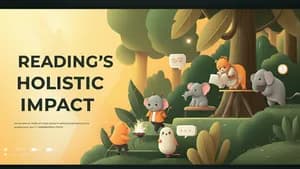

Reading is far more than a passive act of decoding text; it is a dynamic engagement that profoundly shapes individual intellect, emotional intelligence, and social consciousness. Its holistic impact extends beyond personal enrichment, serving as a foundational pillar for the development of an informed, engaged, and resilient citizenry. In an increasingly complex world, the ability to critically consume and synthesize information, understand diverse perspectives, and participate meaningfully in civic life hinges significantly on a society's reading culture.
Enhancing Cognitive Abilities and Critical Thinking
At its core, reading is a powerful exercise for the brain. It actively stimulates neural pathways, improving memory, attention span, and language acquisition. Beyond these fundamental benefits, sustained reading cultivates sophisticated cognitive abilities essential for navigating modern challenges. Engaging with complex texts, whether academic, journalistic, or literary, demands critical thinking, analysis, and synthesis. Readers learn to identify arguments, evaluate evidence, discern bias, and form independent judgments. This mental discipline is crucial for citizens to differentiate fact from misinformation, question assumptions, and approach societal issues with a nuanced understanding rather than succumbing to oversimplified narratives.
Fostering Empathy and Broadening Perspectives
One of reading's most profound contributions to citizenship is its capacity to cultivate empathy. Through narratives, biographies, and historical accounts, readers are transported into different lives, cultures, and historical contexts. They experience the world through the eyes of others, grappling with their struggles, celebrating their triumphs, and understanding their motivations. This vicarious experience breaks down barriers of ignorance and prejudice, fostering a deeper appreciation for human diversity and shared humanity. An empathetic citizenry is better equipped to engage in constructive dialogue, understand the roots of social issues, and advocate for policies that serve the collective good, rather than being confined by narrow self-interest.
Building Knowledge and Informed Decision-Making
An informed citizenry is the bedrock of any healthy democracy. Reading is the primary conduit through which individuals acquire the knowledge necessary to understand the intricate workings of their society, economy, and political system. From understanding historical precedents that shape current events to grasping the scientific principles behind public health policies, reading provides the essential context and data. This knowledge empowers citizens to make informed decisions at the ballot box, participate intelligently in public discourse, and hold their elected representatives accountable. Without a broad base of knowledge, citizens are susceptible to manipulation, unable to critically evaluate policy proposals, or effectively advocate for their interests.
Strengthening Civic Engagement and Discourse
The ability to read critically and comprehensively directly translates into more effective civic engagement. Citizens who read regularly are better prepared to understand complex legislative proposals, analyze economic reports, and engage with diverse viewpoints presented in news and commentary. This preparation enables them to participate in public debates with well-reasoned arguments, contribute to community initiatives, and articulate their concerns clearly. Furthermore, a shared culture of reading fosters a common ground for intellectual exchange, promoting a more robust and respectful public discourse essential for democratic problem-solving. It equips individuals not just to consume information, but to actively contribute to the ongoing conversation that shapes their communities and nations.
Preserving and Advancing Culture
Reading also plays a vital role in the preservation and advancement of culture. Through written works, societies transmit their history, values, traditions, and innovations across generations. Literature, philosophy, scientific treatises, and historical documents form the collective memory and intellectual heritage of humanity. By engaging with these texts, citizens connect with their past, understand their present identity, and are inspired to contribute to the future. This continuous engagement ensures that cultural knowledge is not lost but rather reinterpreted, challenged, and built upon, fostering a dynamic and evolving societal consciousness.
In conclusion, the holistic impact of reading extends far beyond individual intellectual growth. It is an indispensable tool for cultivating an informed, empathetic, and actively engaged citizenry. By enhancing cognitive abilities, fostering empathy, building foundational knowledge, strengthening civic discourse, and preserving cultural heritage, reading empowers individuals to navigate the complexities of modern life, participate meaningfully in their communities, and contribute to the health and vitality of democratic societies. Nurturing a robust reading culture is, therefore, not merely an educational goal, but a fundamental imperative for the sustained well-being and progress of any nation.